
A recent press release from Stanford Medicine stated that scientists have discovered a treatment that can reverse cartilage loss in aging joints and prevent arthritis after knee injuries. If this is as good as it sounds, it may indeed be akin to finding the holy grail.
What Did Stanford Researchers Discover?
As we age, our bodies make more of a protein that leads to the breakdown of cartilage, which is the covering of the bones in our joints. In this mouse study, researchers showed that they could block the function of this protein and therefore prevent the development of arthritis and even reverse it. They were also able to show that mice who injured their ACL and were given this injection into the knee did not develop arthritis.
Why We’re Not There Yet
While this research is very exciting, there is no data on the use of this drug in human joints. We do not yet know the possible effects on humans or the potential side effects. Unfortunately, we aren’t close to simply getting a knee injection and reversing arthritis, but I hope this will be possible in the future.
If you want to learn more about the research, check out these links:
- Stanford Medicine: Inhibiting a master regulator of aging regenerates joint cartilage in mice
- Science Daily: Stanford scientists found a way to regrow cartilage and stop arthritis
If you’re interested in how these kinds of breakthroughs connect to real-world knee surgery, I’ve been involved in multiple studies on cartilage restoration and joint preservation in the knee. Learn more about my research.
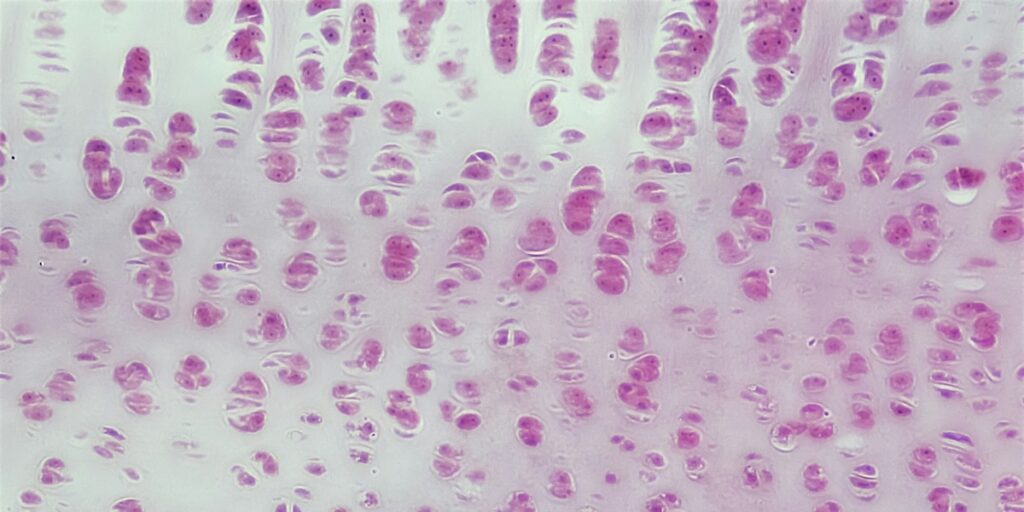
The image in the header shows healthy joint cartilage under the microscope — this smooth, purple-stained tissue is the hyaline cartilage that normally cushions the ends of the bones in your knee.
Photo by Bioscience Image Library by Fayette Reynolds on Unsplash.