
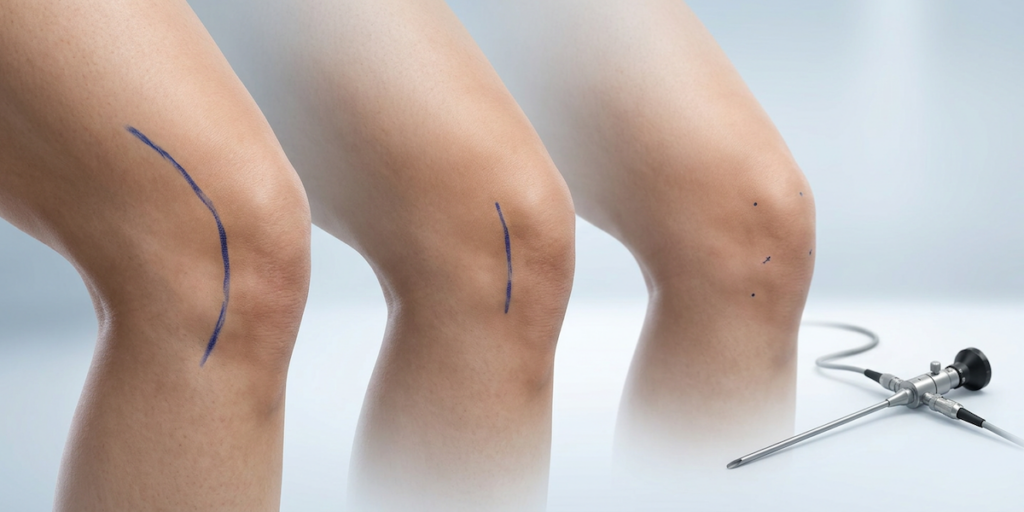
Knee surgery has undergone a remarkable transformation over the last few decades. In my latest feature on Hilary Topper on Air, we explore the evolution of knee surgery—moving from traditional “open” procedures that required large incisions to the sophisticated, minimally invasive arthroscopic techniques I use today at the Hospital for Special Surgery.
In this article, I discuss how “keyhole” surgery and robotic-assisted technology have revolutionized the patient experience. By sparing healthy tissue and using high-definition imaging, we are able to offer faster recovery times and better long-term outcomes. Whether we are discussing a total knee replacement or specific patient exercises for rehabilitation, the goal is always to get you back to your active life as quickly as possible.
Check out the full article here: The Evolution of Knee Surgery: From Open to Arthroscopic
Highlights from the feature on the evolution of knee surgery:
- The History of Open Surgery: Why older methods required longer recoveries and more downtime.
- The Arthroscopic Revolution: How tiny incisions and specialized cameras changed the game for ligament and cartilage repair.
- Robotic-Assisted Precision: The role of 3D modeling and robotic arms in achieving perfect implant alignment.
- Future of Knee Care: A look at biological treatments and 3D-printed implants tailored to your unique anatomy.
Image created with AI.